CdM presents El Greco in Valencia, Toledo & New York

THE GRECO'S MUSICAL JOURNEY: VALENCIA, TOLEDO & NEW YORK

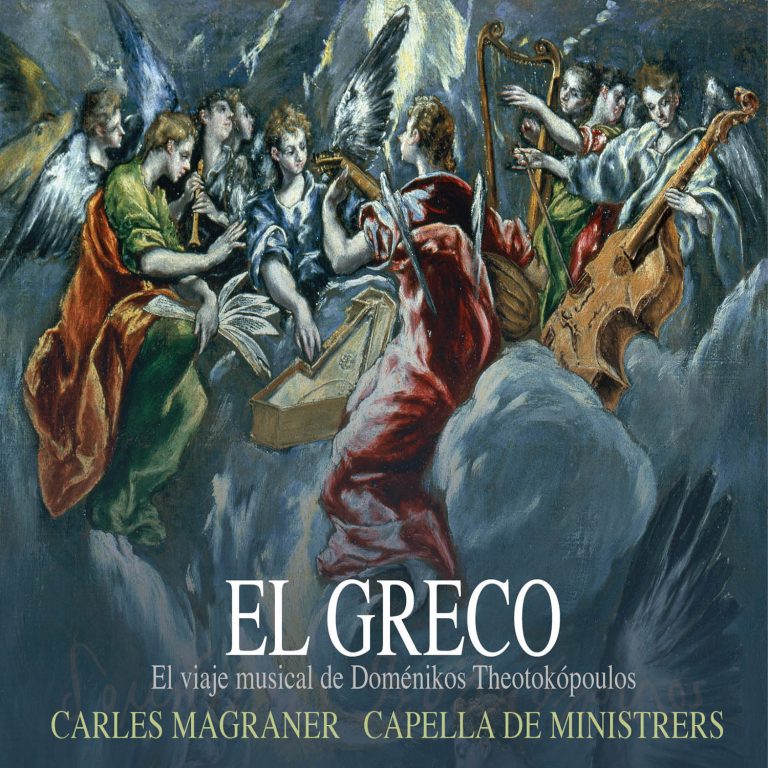
Doménikos Theotokópoulos's musical journey includes the most iconic pieces of music from his birth city in Crete, his time in Venice and Rome, to finish his days in the Spanish city of Toledo. As quoted the painter Jusepe Martinez in his Discursos practicables del Noblísimo Arte de la Pintura, around 60 years after El Greco's death: "He won many ducats, spent on unnecessary extravagance of his house, having salaried musicians to enjoy all the delight when eating''. So, let's serve him as the music. This release, that includes texts of Alfonso de Vicente and Álvaro Zaldívar, is available since January 2014 at digital plattforms, CdM on-line Shop and more than 25 countries throught Outhere.

Continue ReadingCdM presents El Greco in Valencia, Toledo & New York

Naxos of America Launches New Labels for Distribution

Naxos of America Launches New Labels for Distribution

Since its beginning in 1987, the Capella de Ministrers ensemble, directed by Carles Magraner, has developed an important investigative and musicological task in favor of the musical Spanish patrimony, from the medieval times up to the 19th century. The result brings together the perfection of three key factors: historical rigor, musical sensibility and an uncontrollable desire to communicate the music.

http://www.sys-con.com/node/3083568

Continue ReadingNaxos of America Launches New Labels for Distribution

European day of Early Music 2014

21 March 2014 - Capella de Ministrers & Unesco patronage for the european heritage

A celebration of more than a millennium of music, through concerts, events, and happenings taking place simultaneously across Europe, the REMA European Day of Early Music will be an official day for early music and a focal point for the promotion of the historical musical heritage in Europe, under the patronage of Mrs Androulla Vassiliou, member of the European Commission. Early music is a central part of the cultural heritage shared by Europeans, closely connected with other artistic expressions such as dance, theatre, and architecture. It spans more than 1000 years of music, written down or transmitted by oral tradition, from the Middle Ages to the end of the 18th century. While some of the composers of these eras, for instance Johann Sebastian Bach, Claudio Monteverdi, or Hildegard von Bingen, are widely known, there is a large repertoire still to be rediscovered by today’s audiences. The European Day of Early Music aims to increase awareness of the music from the medieval, renaissance and baroque periods and bring it to the attention of a wider audience.

Desde su creación el año 1987, el grupo Capella de Ministrers, bajo la dirección de Carles Magraner, ha desarrollado una importante tarea investigadora y musicológica en favor del patrimonio musical español, desde el medioevo hasta el siglo XIX. El resultado, transformado en testimonio musical, conjuga a la perfección tres factores clave: el rigor histórico, la sensibilidad musical y, muy especialmente, un incontenible deseo de comunicarnos y hacernos partícipes de estas experiencias. La actividad concertística de la formación ha sido muy intensa desde el inicio de su actividad, recorriendo las mejores salas de música de España y el extranjero con más de 45 discos grabados. Capella de Ministrers es también impulsora del Curso y Festival de Música Renacentista de Morella, en el que se presenta este año la tercera edición de esta iniciativa, tomando como punto de partida la celebración del 600 aniversario del Concilio de Constanza.

Continue ReadingEuropean day of Early Music 2014

El Greco and snails

El Greco and snails (also music, everything is comparable) - Álvaro Zaldívar Gracia © Licanus 2014

Doménikos Theotokópoulos’s musical journey by Capella de Ministrers

Even though the idea seems to have been proposed by Dalí, the talkative genius, to other people, it is Oscar Tusquets, the Barcelona architect and designer, who best retells it at the beginning of his famous collection of essays, published in Barcelona by Anagrama in 1998, which bears that very title: Todo es comparable (“Everything is comparable”).

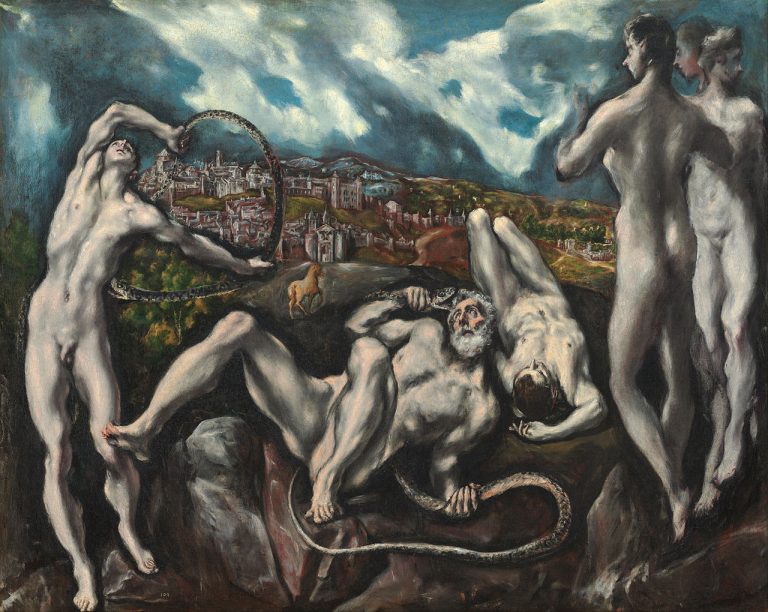
Inserted to prove “how entertaining it was to eat cargols a la llauna in the Durán [restaurant] at Figueres with Salvador Dalí”, Tusquets starts the remembered dialogue with a witty question/answer by the painter, “Did you realize that snails are like El Greco? Indeed, like Domenicos Theotocopulos who, born in Crete, learns how to paint properly that sort of icons they do over there; but, as soon as he moves to Venice, his admiration for Tiziano and the influence of Tintoretto make him the most Venetian of all Venetians, the most sensual, colourful and expressive painter of the Republic; but then he arrives in Toledo, and suffering a traumatic conversion, turns austere, sober, Old Castilian, the knight with his hand on his breast, with an overflowing mysticism, the most sincere character of the eternal Spain.”

Continue ReadingEl Greco and snails

Music in the “Cité” of Christine de Pizan

The founding of new cities was not a medieval custom. Famous kings in antiquity had already created them, naming them eponymously: Alexandria, after the Macedonian King Alexander the Great; Constantinople, after Emperor Constantine; Recopolis after the Visigoth King Recaredo. Eventually, imaginary cities were also created. In the early sixteenth century, Thomas More created the island of Utopia, and Campanella did the same with the City of the Sun, as well as Bacon with Bensalem a century later. However, the idea had already been developed in a much more original way by a woman at the beginning of the fifteenth century. When Christine de Pizan (1364-1420) finalized the third and last part of her book Le Livre de la Cité des Dames in 1405, she had created and invented a city, in the etymological sense of the word, which signifies the creation or the discovery of something. The author had been able to see and visualise this imaginary city, which is the first step for something to become real, as taught by Saint Anselm not long before, although in a different context. This city, conceived, created and designed by a woman born in Venice and raised in Paris from a very young age, was surprisingly not named after the author. She called it, simply but significantly, the City of Ladies, a powerful landmark within a decisive movement which helps to explain the history of Europe and our history up to the present day: the Querelle des Femmes (Complaint of Women), a revolutionary process which breaks away from the traditional accounts of patriarchal history. This movement focused on aspects and views ignored by the gentlemen who monopolized the various Truths which have been assumed and replicated by our culture. By systematically questioning the division of society in gender roles and its unfair hierarchy, it may be considered the first sign of feminism in the Western world. Augustine wrote The City of God to defend Christianity from pagan danger. Christine wrote The City of Ladies to defend women ( “to you, ladies, maidens, women of all conditions... those who have died, those who are still alive and those who will come in the future,” lib. 2 ch. LXIX ) from patriarchy.

Continue ReadingMusic in the “Cité” of Christine de Pizan

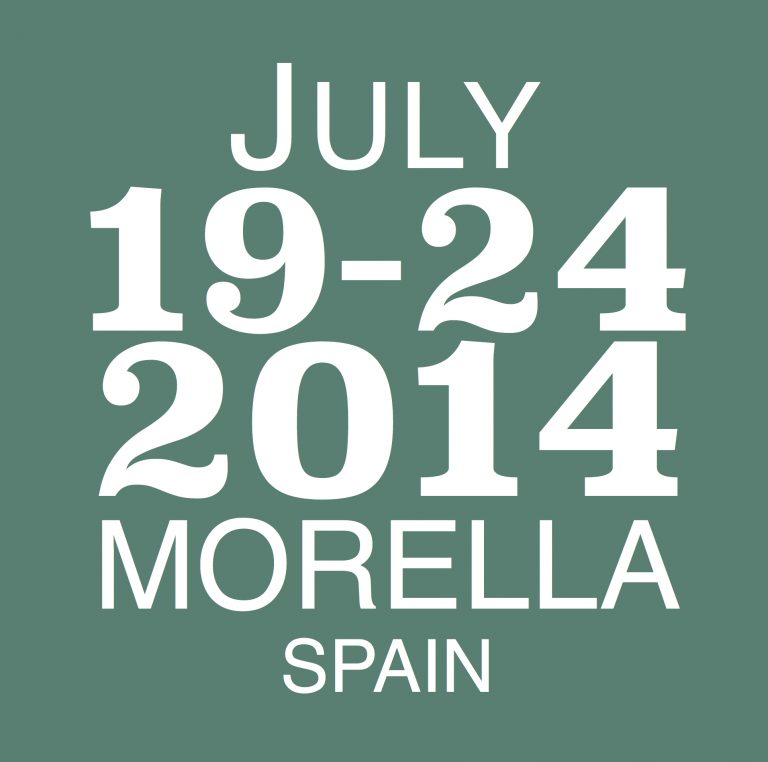
3rd INTERNATIONAL COURSE ON MEDIEVAL & RENAISSANCE MUSIC MORELLA 2014

Capella de Ministrers will open the 3rd INTERNATIONAL COURSE ON MEDIEVAL & RENAISSANCE MUSIC with a special concert program in commemoration of this event: Timete Deum, the Apocalypse of St. Vincent Ferrer (Youtube). Full information: Cultural Comes.

In order to put an end to the Great Western Schism - which had led to the paradoxical situation of three simultaneous popes in dispute for the primacy - and to address several doctrinal issues of the Catholic Church, an ecumenical council took place in Constance from 1414. In the preparations for this historic event, two Spanish figures had a decisive role: Benedict XIII, pope of the Avignonese line (known as "el Papa Luna" in Spanish), and the Valencian saint Vincent Ferrer. Their decisions were to be crucial for their own fate and for the future of Europe. Thus, on 18 July 1414 the antipope Benedict XIII, fleeing from Avignon, the Valencian saint and King Ferdinand I (father of Alfonso V the Magnanimous) met in Morella. Their parley lasted for fifty days but was unfruitful. Shortly thereafter, King Ferdinand and St. Vincent Ferrer, in a sermon in Perpignan, decided to withdraw their former support to the Aragonese antipope, who was then isolated in Peñiscola until his death. Taking the 600th anniversary of this event as starting point, the 3rd edition of the International Course and Festival on Medieval and Renaissance Music of Morella will pay homage to these figures, decisive for Late Medieval Europe. To mark this anniversary, Carles Magraner, leading the ensemble Capella de Ministrers, will open the Festival with a special concert program in commemoration of this event: Timete Deum, the Apocalypse of St. Vincent Ferrer.

Continue Reading3rd INTERNATIONAL COURSE ON MEDIEVAL & RENAISSANCE MUSIC MORELLA 2014