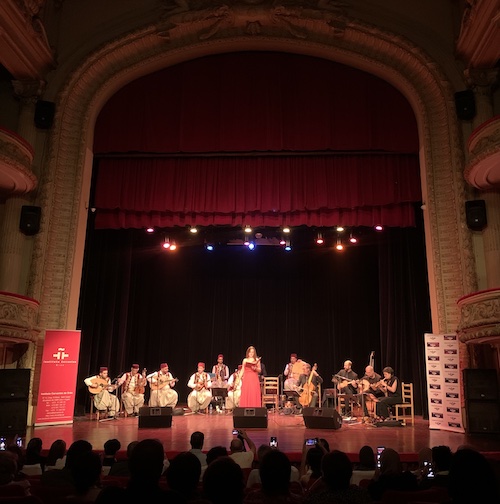
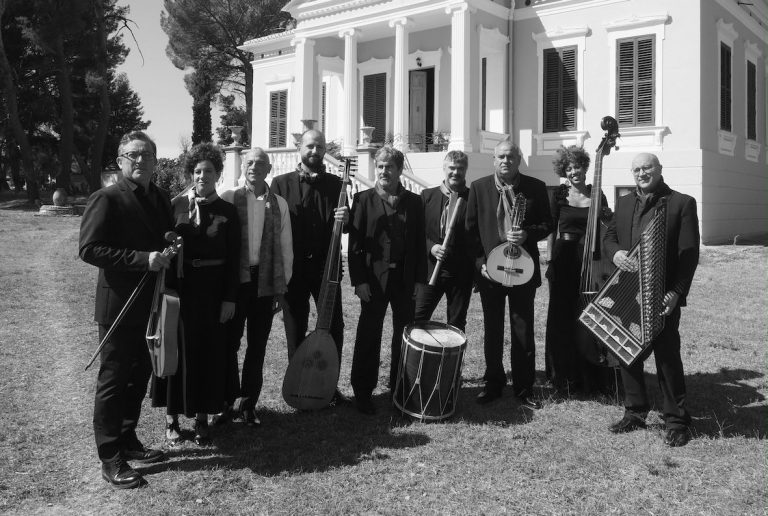
Capella de Ministrers receives the Press Award for the Best Early Music Spanish Ensemble
In its seventh edition, the Association of Spanish Groups of Early Music has presented its Awards for Creativity and Innovation in Early Music. Capella de…
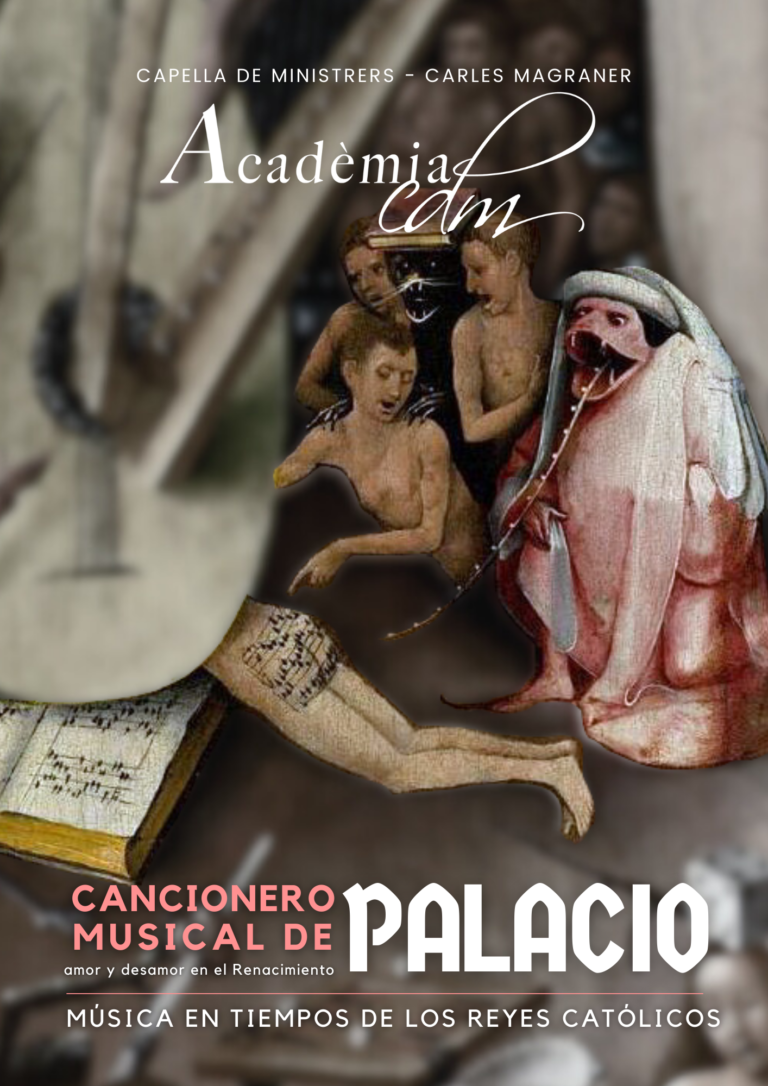
Carles Magraner delves into the universe of Leonardo's grotesque heads that place us far from the search for beauty, in a world at odds with form (deformity) and norm (abnormality). Is there music in that world? Music -which is, by definition, harmony- has historically found...
Capella de Ministrers has published the album 'El collar de la paloma', a work based on the homonymous book by the Andalusian humanist, poet, and…
A CHRONICLE OF A MUSICAL JOURNEY AROUND THE MEDIEVAL MEDITERRANEAN
Carles Magraner proposes a musical journey around the Medieval Mediterranean to the hand of one of the most important theologists and philosophers of the History: Raymundus Lullus. The musical references of his writings are brief but fundamental. In the "Revelatio Secretorum Artis" the 18th century german lullist Ivo Salzinger wrote his work "De Secreto Musicae" where, after reiterate the musical authority of Boethius and Pythagoras, deals with the division of the monochord, the musical consonances and the solmisation system of Guido d’Arezzo, and following Lullus says that music is "ars inventa ad ordinandum multas voces concordantes in uno canto". However, in the “Tree of Knowledge’’, where Lullus imagines fourteen trees of knowledge, the most important is the “humanal tree’’, in which the music takes place, and we must “consider the voices to be high and low and medium, and long and short, thin and depth, proportional to the vocal and consonant accents, to adorn the voices and the melody of the instruments, that are pleasing to be heard by the hearts of the men’’. Other musical references in Lullus are found also in his “Doctrina Pueril’’, where he wrote: “The music is the art by which we have the straight doctrine to sing and play the instruments, raising and lowering the voices in a form to concur the different voices and sounds’’.
Image: ©Badische Landesbibliothek, Karlsruhe. Cod. St.Peter perg 92 fol.3v
Carles Magraner presents Capella de Ministrers new concert program dedicated to Spanish historical music from 16th to 17thcenturies. Capella de Ministrers presents a concert program for…
The Fundació Cultural CdM aims at putting into value the musical heritage of the former Crown of Aragon. A cultural common heritage of remarkable…